
The Chair of the Math and Computer Science Department at my school shared this slide today. He was making the case for a curricular change, and he decided to take a productive detour.

The Chair of the Math and Computer Science Department at my school shared this slide today. He was making the case for a curricular change, and he decided to take a productive detour.
Last year, due to the pure luck of habit and timing — after breakfast making, lunch packing, shower wrangling, traffic, etc. — I started to arrive at work at the approximate moment when a father and his son took their final steps up Bloomfield Avenue to reach our school’s crosswalk and the traffic light that controlled it. In my usual arrival window, I witnessed this walk more often than not.
Sometimes the light was red, so the son crossed left. Sometimes it was green, so he pushed the button and waited with his father a few more beats before leaving, left. Always these familial walkers seemed so genuinely and sweetly content — similar stride, similar height, similar mug. Always they parted with what seemed like respect and acknowledgement. A pat on the back, a handshake, a smile, or the escaped birds of a good shared laugh.
I can’t say for certain that they were happy. I can’t say for certain that they were agreeing or agreeable. But what I can say — with utter certainty — is that they spent most of the days of the son’s senior year walking alongside each other on the way to his school.
Somehow, for me, the story gained a layer when I learned that the father was an executive at a big, global corporation. On paper at least, he was supposed to be busy. Important. A tough negotiator. Accomplished.
Off paper, I have no idea — except for the last word. He was an accomplished father, for sure, just because he kept showing up, kept walking alongside his son, did so openly and publicly. School, for me at least, always started when I saw these two. The lessons as simple as showing up, putting one foot in front of the other, grounding relationship in ritual, rain, snow, sleet, or shine.
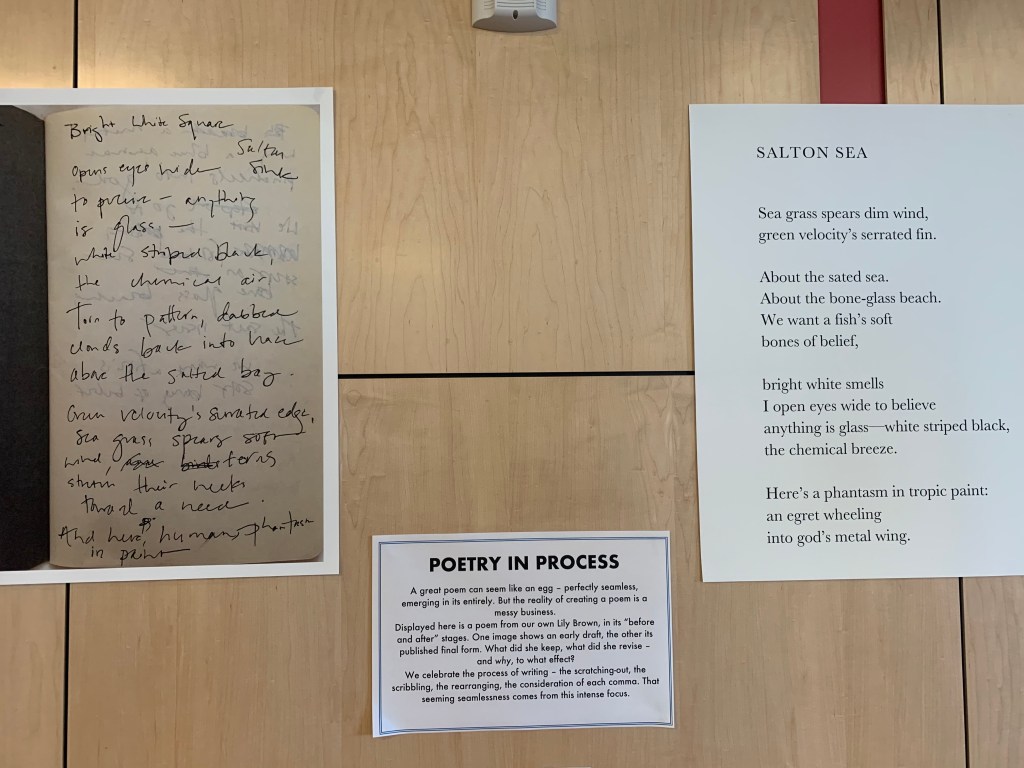
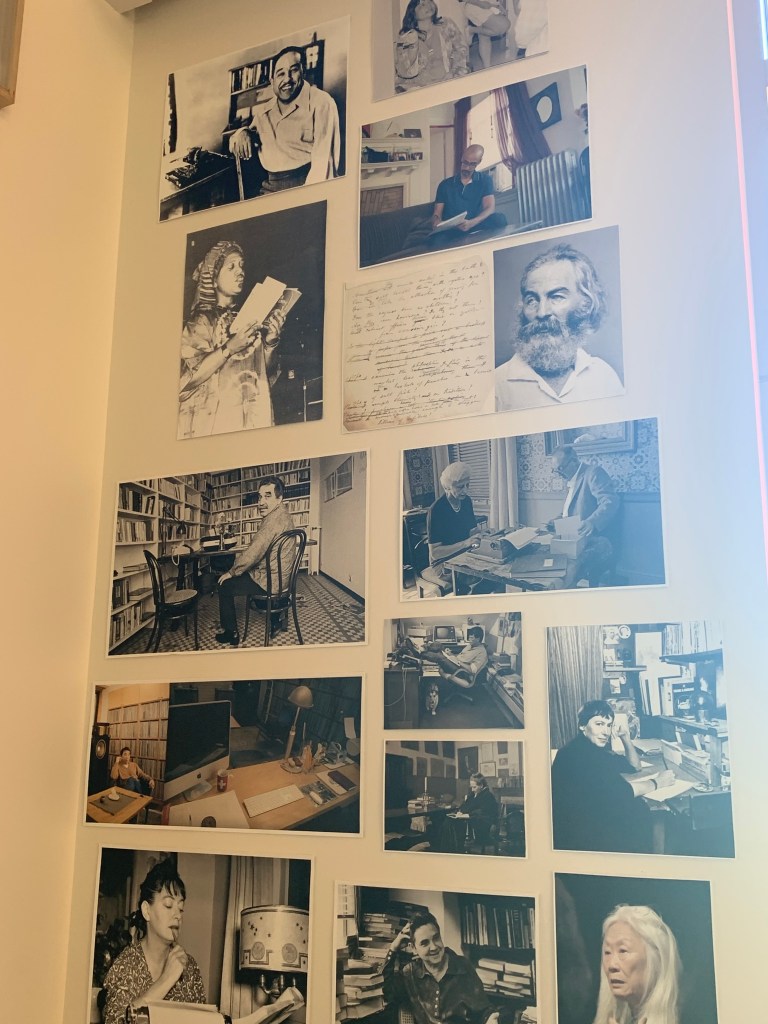
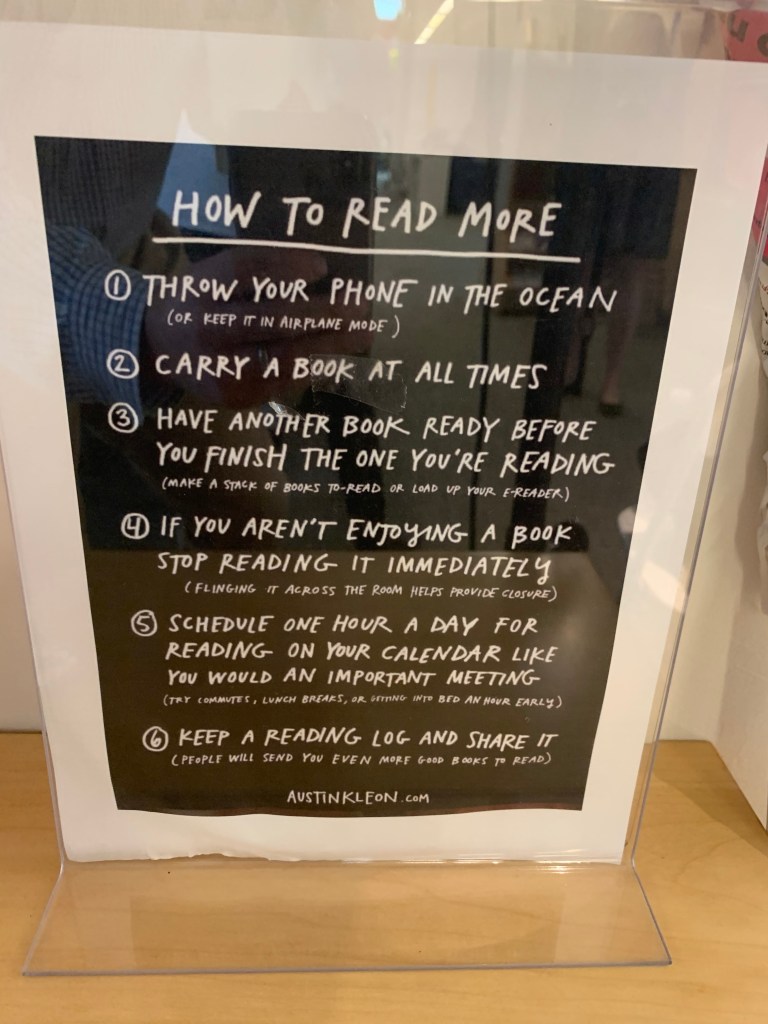
My friend and colleague Jill runs a library / academic center and is interested in finding ways to showcase student work and creative process. Today, she asked me to see the photos I took when I visited The Nueva School during a trip to California. In the spirit of taking “the extra two minutes,” I turned my response into a 7000+ word blog post.


With a H/T to Eric Hudson, here’s a nice article about the “spacing effect” by Nick Soderstrom. If you’re in a hurry, here’s a quick synopsis (but come back later to solidify your learning):
There’s a simple, unintuitive way to study smarter. Simply by breaking up study sessions into smaller, manageable chunks and spreading them out over time, a lot more learning will take place. Researchers who study learning and memory call it the “spacing effect,” and it’s an incredibly powerful and easy way to enhance long-term retention.
Some meeting ideas to test in the coming weeks, courtesy of Steven G. Robelberg in HBR:
Today, during In-Service, my school heard from and met with Dr. Mary Helen Immodino-Yang. Wow . . . she’s an incredible presenter and capable of explaining deeply complicated ideas in simple and memorable ways. I wrote down a few big ideas.
Over Thanksgiving, I’ll most likely wind down my spare time literary activities, so here’s a summary of November, approximately.
Happy Thanksgiving!
I’m always on the lookout for productivity tips, but I find that many of them are mere retreads of classic works or ideas. Here’s one that felt slightly new to me.
Challenge yourself to figure out what meetings could be replaced by async communication or more transparent project management.**
Most people with whom I work are pretty good at “async communication,” though I feel that we could all improve in the area of “transparent project management.” It’s interesting to think that one way for me to reduce my time in meetings — and increase my time in really focused and concentrated work — could be to change the project management culture in my organization. I have control over this situation to the extent that I can model TPM in groups, committees, and teams for which I am responsible. Strategically, or in the long-run, I can make time by making certain information more visible to key stakeholders.
*Pardon the philosophy pun!
**Source: Postlight Business Insights
**H/T: Why is this Interesting newsletter from 11/22/19
This article from the Financial Times, which may or may not be behind a paywall depending on your browser, cites some recent research from Bob Sutton and his oft-partner Huggy Rao. Here are the gems — quotations from Sutton or Rao — that are worth keeping and turning over a few times:
Last, according to Rao, leaders:
I have also understood and processed these ideas using an “actor / agent” lens, but no matter what we call them, they are worth our most effortful aspirations and our most aspirational efforts . . . especially the bit about sending employees “back home whole.”
I enjoy reading the semi-regular newsletter from Triangle Associates. (Though, after a quick scan of their website, I can’t figure out how to help you subscribe.) Here’s what they recently wrote about strategy:
[S]trategy-making is about planting trees today that will bear fruit years in the future . . . The guiding question behind strategy is, “What should we be doing to ensure the long-term viability of ________?” (Leading Trends newsletter, November 2019)
The blank [“________”] above is mine, and it’s symbolic of the way I am currently thinking about strategic action and planning on a personal level. Where are the blanks in my schedule? Did they arrive there intentionally or haphazardly? More specifically, the questions I’m carrying around are: When am I using strategic pauses? And, am I being strategic about when, where, how, and why I pause?
In some ways, all pauses are strategic in that they allow a person or organization to rest and reset before further action. (Resets are trees that bear fruit.)
In other ways, though, pauses can and should be intentional — and pursued with discipline — because some pauses are more valuable than others. Also, some pauses are decisions that can be made once and then forgotten, because they will continue to happen until someone makes a different decision.
For example, I just learned that I can set a delay on every email I send. This action allows me to send an email and then update it, change it, or call it back before it arrives in someone else’s inbox. It’s a pause that is strategic because I programmed it — once — in order to make a positive difference in — all of — my future email communication.
Another strategic pause I’ve planned — albeit a weird one — is to schedule time to read through the owner’s manuals of the last few large purchases I have made. I’m assuming there are maintenance schedules to which I should be paying attention or gray flags (rather than red flags, which are obvious) that I might be missing. Baking in some time to read such manuals could save me time — and money — in the long run.
Blogging, for me, is a strategic pause — a time in the day when I write down things that I have learned and want to remember or ideas that are jumbled up in my mind and, if given the space, will become synthesized and usable bits of knowledge.
Skipping every other page in your notebook (if you take notes by hand) plants the seed for a strategic pause because it reminds you that you should go back and recopy your notes, from the full page to the blank page. This pause — and redo — promotes learning.
Having coffee every morning with a loved one (and no agenda) is a strategic pause.
John Cage’s 4’33” stands as a testament to the strategic pause in musical composition.
Adding buffers around meetings is a strategic pause in that, if the meeting ends early, you’re not butting right up against your next task. You have time to breath or process or just allow the conversation to move off the agenda.
(Planning a sabbatical is a major strategic pause, though one that few can afford.)
Sleep, quite literally, is a strategic pause.
I’m realizing as I’m writing this, that one way to test the value of a planned strategic pause is to imagine what would happen if you stuck with it, on a regular basis, for a decade. If you paused and paused and paused again at a regular cadence. Would your life be better? Would your business be better? Would your family be better?
I invite you now to plan your own pauses, to write them down, to test them, and to really commit to them as they appear in your planners and your calendars and your Apple Watches and your inboxes. A lot of reminder systems offer mere distractions; you can use these systems for good, though, reminding yourself, from time to time, to be purely and blissfully distracted.
 Refreshing Wednesday, LLC