Seeing Myself Teaching

Today, as part of my school’s Professional Growth Program, I used an iPad mounted on a tripod to video myself teaching. I have only had time to watch the first seven minutes, but I have already derived a lot of benefit from watching things like my posture, my tone of voice, where I stand, and the extent to which students are focused on contributing vs. typing (i.e., head up vs. head in laptop).

A side benefit is the fact that I had to explain the presence of the camera to my every curious / squirrelly class. This led to a quick but good conversation about a lot of meta-concepts that matter to me and that I enjoy teaching but often do not, at least explicitly: the benefits of practice, the value of reflection, the importance of seeing yourself “in the act of,” and the necessity, for growth, of being self critical without being overly hard on yourself.

They think I’m a pretty good teacher. I know this because I’ve surveyed them. I like the implied lesson of the camera’s presence — even pretty good, even well rehearsed, even — or rather, especially — automatic can seek to improve. Must seek to improve.

Bad or Good at Making Decisions

I’ve been keeping an eye on the people in my life who are really effective decision makers. Two of the underrated capacities that underpin their successful processes are quite simple: 1) they carefully keep track of decisions that need to be made, and 2) they actually make the decisions on their decision list, even if they have incomplete information. The first capacity is organizational; the second is behavioral.

So, if you think of yourself as a bad decision maker, try keeping a decision list each week and picking a weekly, recurring time (preferably early in the day) when you make as many of those decisions as you reasonably and responsibly can. See if that changes anything for you.

Young / Monk / Lowe

I love this Zach Lowe sentence, a mere parenthetical remark, about Trae Young’s passing.

(Seriously: He has every pass, and he releases the ball a beat earlier or later — depending on what does the most damage — than the typical NBA point guard. Such quirky timing is the mark of genius in a passer.)

http://www.espn.com/nba/story/_/id/26104826/10-things-like-including-lakers-tank-talk

It reminds me of how I’ve heard some people describe the piano phrasings of Thelonious Monk. And it is like the thing it describes — a nice feat for a writer.

Procrastinatory Proofreading with my Daughter (and Benjamin Dreyer)

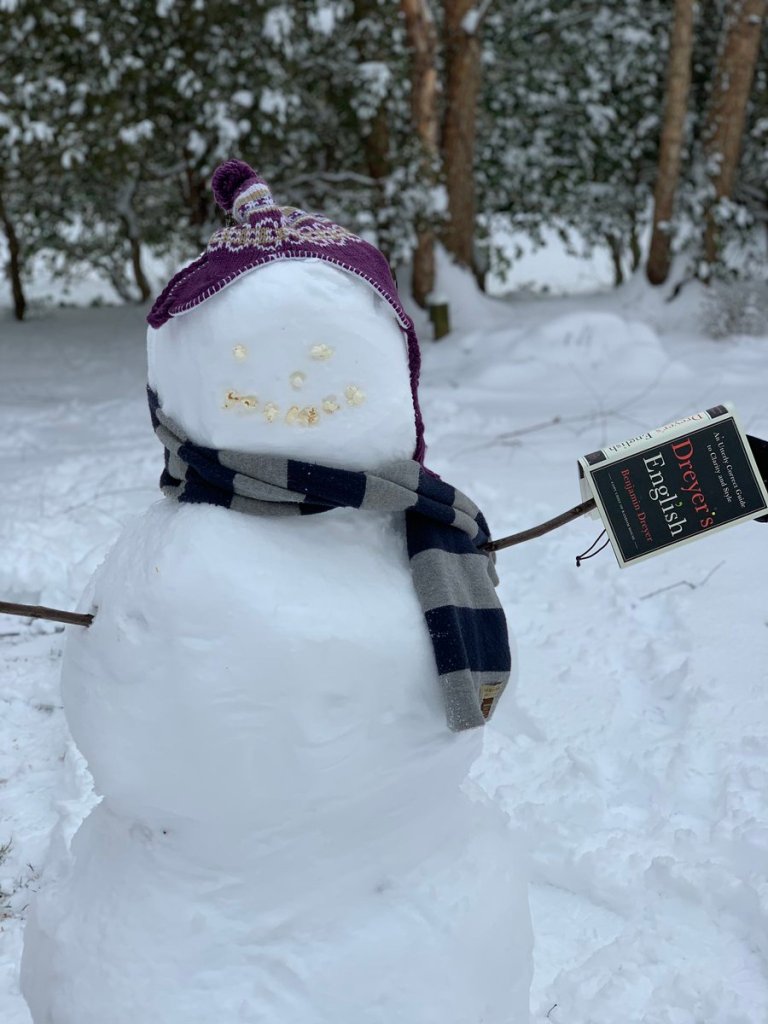
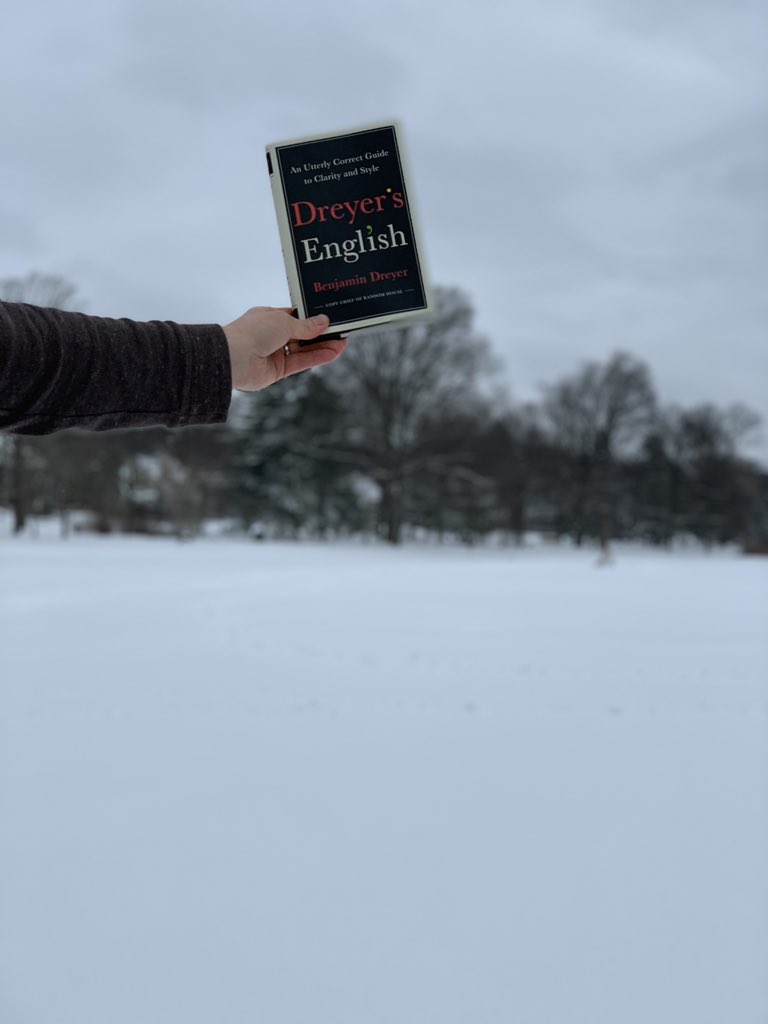
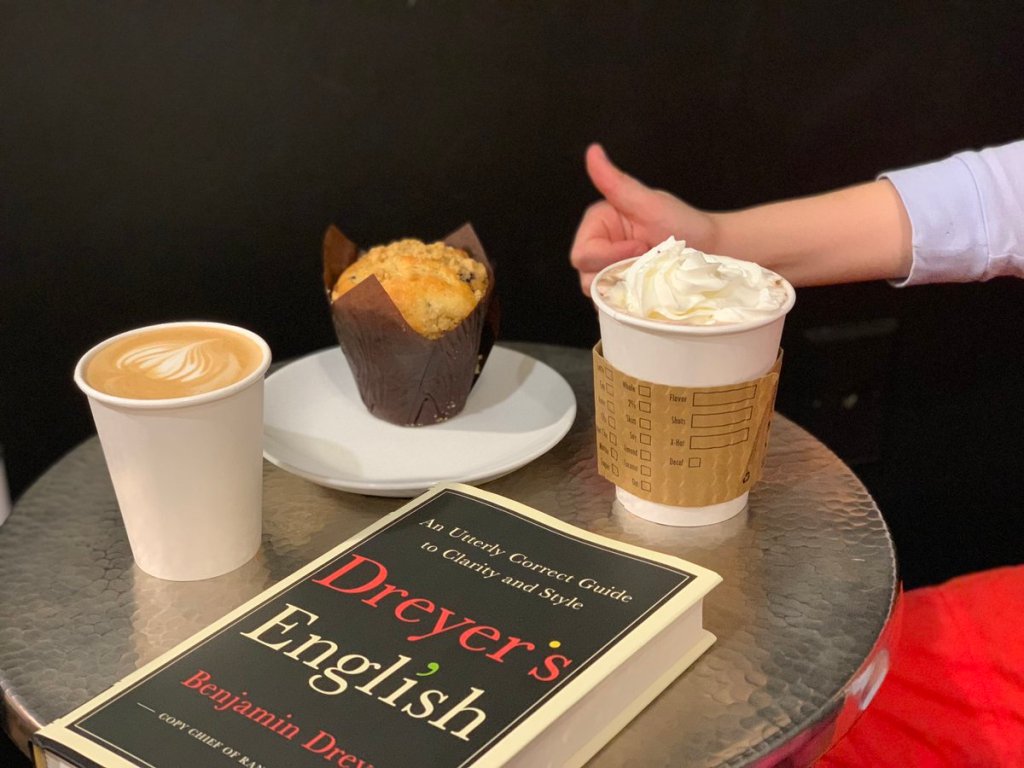
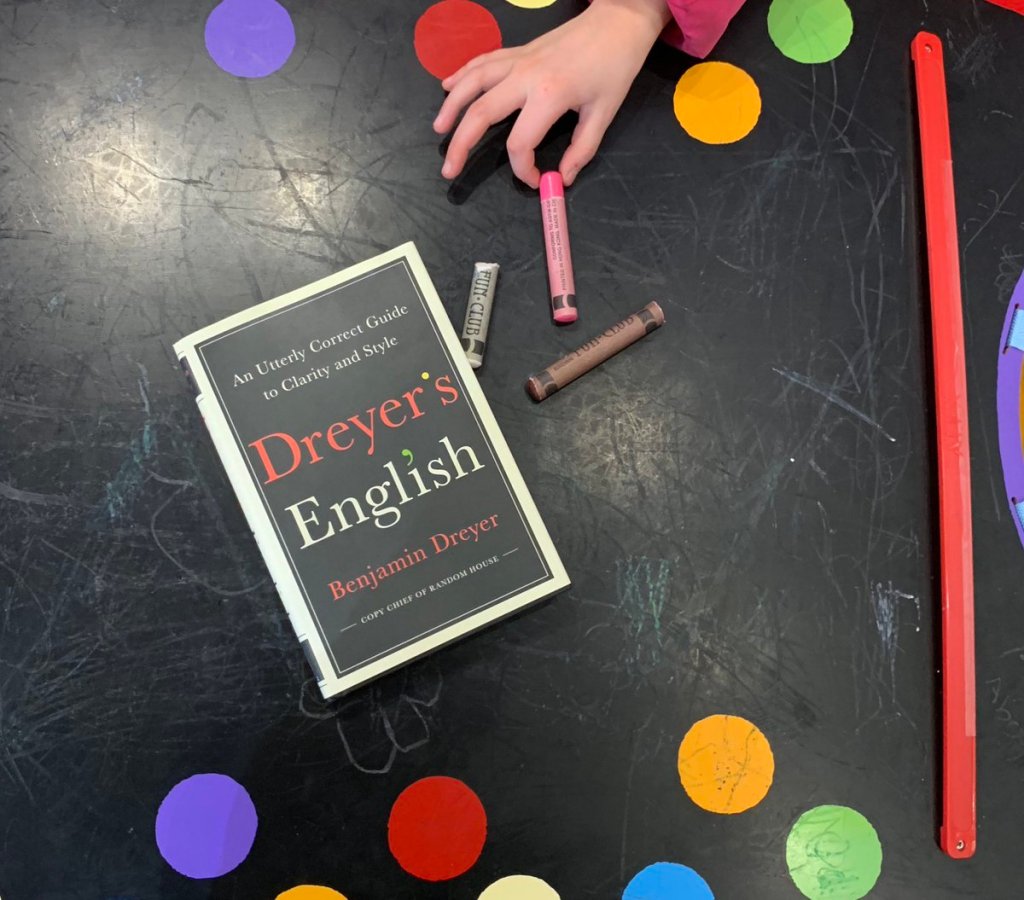
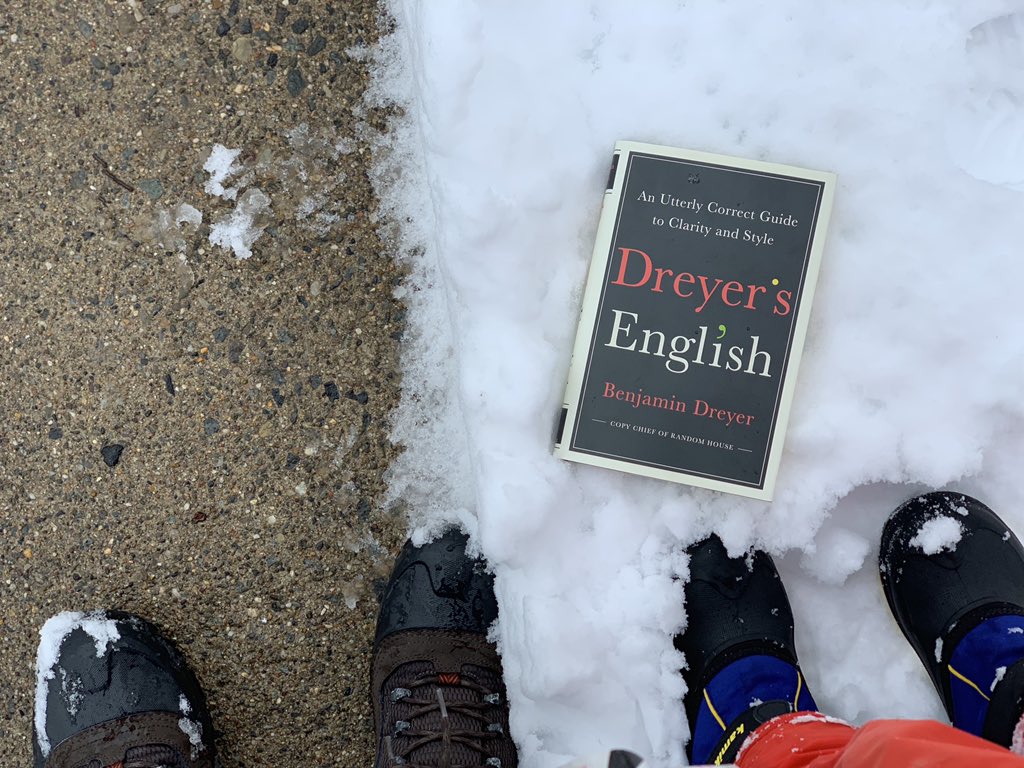
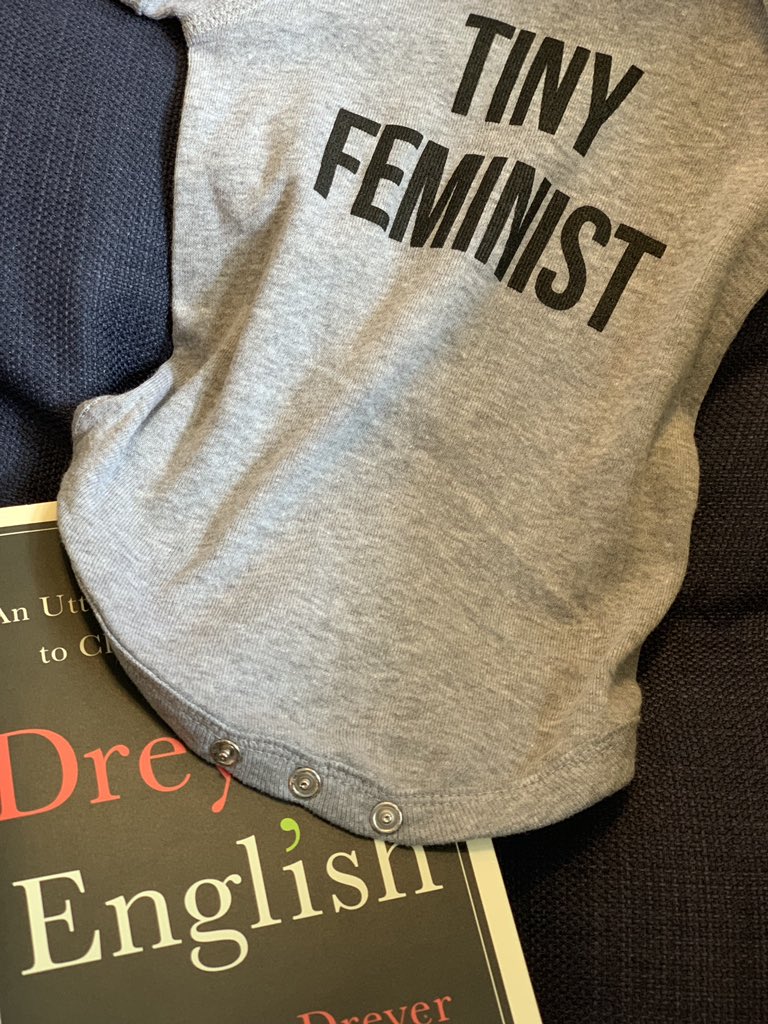
We’ve had a lot of snow in New Jersey lately, and since my son and wife are in Spain for a few days, my daughter and I have been doing our best to keep each other company. I’m also in the final stages of proofing my next book (co-authored with Reshan Richards). To support the proofing process, I’ve been reading Dreyer’s English. Here’s a story, in 11 photos, depicting how well all that is going.

Oldie Goodie

An article I wrote with Reshan has been making the rounds again, and I was reminded of this nice graphic that the magazine made to accompany it. I’m not linking to the article because I think this visual does enough to explain the key concepts — in about 1/4 of the time.

Design Hierarchy of Needs

Today I learned about a “design hierarchy of needs” that essentially maps onto Maslowe’s hierarchy of needs, which is one of my favorite teaching tools when I’m helping students understand novels. In an informative article, Steven Bradley explains all the connections between Maslowe’s hierarchy and his own, and he then offers some analysis and application. What I like best about Bradley’s presentation is that he doesn’t shy away from presenting the key criticisms of these hierarchies.

But then he does a nice crossover, basketball style, placing responsibility back on the user in a way that any pragmatist would appreciate: “These hierarchies are not absolutes that you must follow. As with all design, look at your success criteria to determine your design objectives. Your audience may well prefer an aesthetically beautiful website that has occasional hiccups to a boring website that is perfectly reliable.”

Here’s a screen grab of Bradley’s hierarchy. The idea is, to get to the top, you have to work up from the bottom, satisfying each step. As with all the terminologies I present, I suggest that you now go looking for it IRL. See if it applies to your work or your play. See if it helps you to solve problems. See if it, somehow, makes things lighter or better or more useful. Happy Friday.

Pearl Rock Kane. Rest in Peace

I woke this morning much earlier than usual. And I broke one of my fundamental rules — I checked my email on my phone.

This is how, before 5 a.m., I learned that one of my pals and mentors — one of my teachers and spurs and chief instigators — passed away last night.

Pearl Rock Kane. Rest In Peace.

“I’d do it for a daisy,” she once told me. And what she meant was, “I’d fly across the country and speak about education, just to help a friend.”

“And why do you think that?” she asked me, the first time I met her, in the aisle of a conference center. I loved that . . . the way she listened and challenged. I loved that and heard it, dozens of times, and hear it still.

“You should take your family and move to France,” she once encouraged me, “it’s the perfect time.” This led to a serious conversation at home because, if Pearl was suggesting it, it must be a good idea.

And then there was a lot that she told me that I’m not going to share for the same reason that, when I’m working on an article or book, I don’t like to talk about it. “The work’s important,” she might have said, “guard the fuel.”

I will. I will.

Celebrating 10 Years of Klingbrief

Here’s a letter I wrote to commemorate the 10th anniversary of Klingbrief, a publication of the Klingenstein Center of Columbia University. If you’re interested in the archive, which still contains a lot of evergreen content about education, click here. And if you want to become an official subscriber to the publication (it’s free, peer reviewed, and arrives once a month) click here.

February 2019

Today, this 10th Anniversary issue of Klingbrief arrived in the inbox of 5466 educators. We imagine that, in yours, it joins a letter from your head of school and a note from an advisee. It sits alongside a meeting agenda, an email from a concerned parent, your child’s sports schedule, or a reminder for an upcoming dentist appointment. It competes for your time, in other words, with the business of school and of life.  And we are grateful to you for making time in your days, busy as they undoubtedly are, to join us in pursuit of ongoing professional learning and growth.

Klingbrief was introduced 10 years ago, in February 2009, with a short note from Pearl Rock Kane introducing “[t]his free, monthly publication of carefully selected articles, books, blogs and videos . . . intended specifically for independent school educators.” The very first “brief” addressed teen suicide, offering “three sources . . . that might be of use in the face of such devastation.”  

Then and now, Klingbrief places student learning and wellbeing at its core, and like its very first entry, it aims to cut through the fog, making clear what’s important in independent schools. For the last decade, it has been assembled with much care, thought, and love for the schools — and their programs, policies, faculties, and students — that make up the tangled, prismatic, idealistic, and aspirational community that the Klingenstein Center aims to serve.  

Behind the scenes, not much has changed in a decade, except the growth of the editorial board from five to ten members. The editorial board is tasked with the stewardship of Klingbrief. Each month, we read all submissions and collaborate to determine which to publish. Editors suggest cuts and fight for what they believe should be in that month’s issues, including the “Of Note” feature. Sometimes we agree completely, but some of our best arguments reveal our deepest goals for our publication.  

We consider whether to include the popular book that seems to have already “made the rounds” or to favor the lesser known work. We want each Klingbrief to introduce our audience to as much new thinking and as many new voices as possible. Or, when there’s an issue in the news and on the minds of the sharpest school people we know, we wrestle with our own theory of coverage. Should we always publish articles that respond to current events that are stirring debate and action? Should we push for more or less balance? Should we editorialize? We aim to be organic and to honor the floating conscience of our schools. Sometimes, this leads an issue to be almost entirely “of its time.” And sometimes the entries feel more timeless. More often than not, we publish a bit of both, showing how one can be the other and the other, one.

In each issue we hope that Klingbrief helps us to step out of our schools, which often engage us almost entirely, to hear from others. Before we return to that work, and as we turn 10, I’d like to thank the editors past and present and the schools that inspired them to model lifelong learning. I’d like to thank Dr. Pearl Kane, who, time and time again, helped us to stay true to our purpose. I’d like to thank Dr. Nicole Furlonge, who has continued to support Klingbrief as she begins her tenure as Director of the Klingenstein Center. And most of all, I’d like to thank you, our passionate readers and writers, who consume and contribute to and share Klingbrief each month. With you, we intend to go on, for at least another decade, to meet the challenges and the opportunities, the timeliness and the timelessness, the prose and the poetry of our schools.  

Thanks for reading, writing, and thinking with us!

Stephen J. Valentine
Coordinating Editor, Klingbrief
Montclair Kimberley Academy